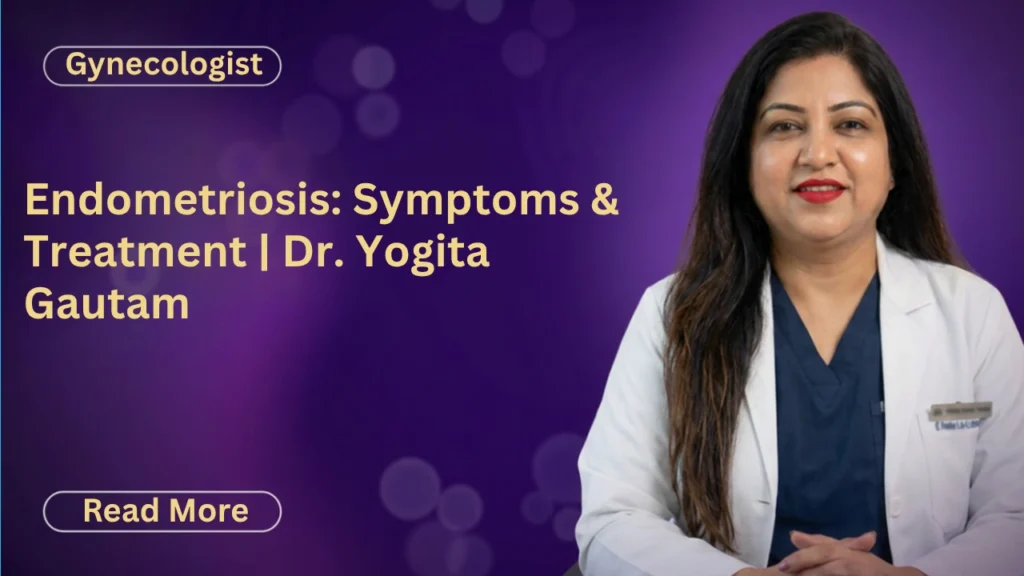
Endometriosis is a chronic gynecological condition in which tissue similar to the lining of the uterus grows outside the uterus. Endometriosis: Symptoms & Treatment, it can cause pelvic pain, painful periods, pain during intercourse, painful bowel movements or urination during periods, heavy or irregular bleeding, and in some women, difficulty becoming pregnant.
Endometriosis can affect women during their reproductive years and its symptoms can vary considerably. Some women may have significant pain with relatively limited disease, while others may have extensive endometriosis with fewer symptoms. Because pelvic pain can have several causes, proper medical evaluation is important for identifying the underlying problem.
Women experiencing symptoms suggestive of endometriosis can consult Dr. Yogita Gautam – Gynecologist in Indore at her clinic at G1, 158-159, Shakti Tower, near Shakuntala Hospital, Sector A, Goyal Nagar, Indore, Madhya Pradesh 452001. For appointment-related information, the clinic can be contacted at 099772 13545.
What Is Endometriosis?
Endometriosis is a condition in which tissue resembling the endometrium, the lining of the uterus, grows outside the uterine cavity.
These areas of endometriosis can occur around the ovaries, fallopian tubes, pelvic lining and other structures within the pelvis. Because this tissue responds to hormonal changes associated with the menstrual cycle, it can contribute to inflammation, irritation and pain.
Over time, endometriosis may also lead to scar tissue and adhesions, which can affect the normal relationship between pelvic organs.
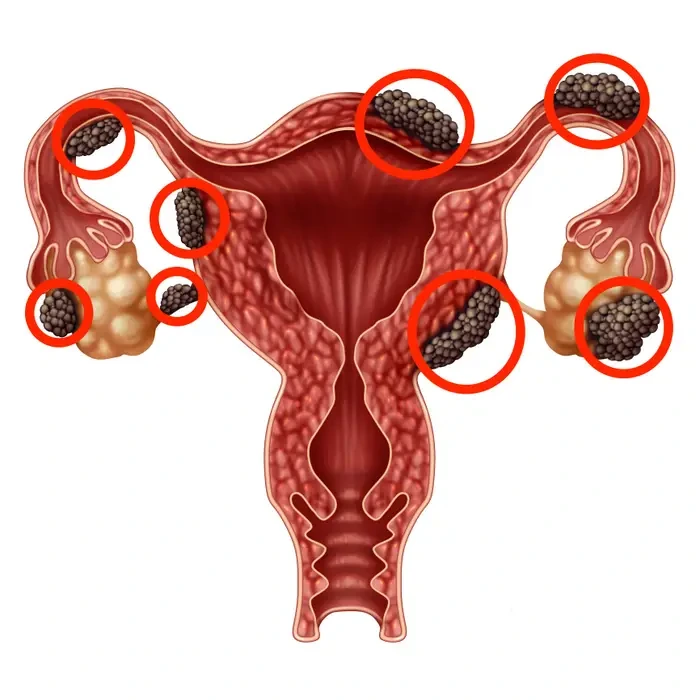
Endometriosis is considered a chronic condition, meaning that symptoms can persist or recur over time. Management is generally focused on controlling symptoms, protecting quality of life and addressing fertility concerns when relevant.
What Are the Common Symptoms of Endometriosis?
The symptoms of endometriosis vary from woman to woman. Some women experience severe menstrual pain, while others may mainly notice pelvic pain, bowel symptoms or difficulty conceiving.
| Symptom | How It May Present |
| Painful periods | Severe or worsening menstrual cramps |
| Chronic pelvic pain | Pain that may occur outside menstruation |
| Pain during intercourse | Particularly deep pelvic pain |
| Painful bowel movements | May become more noticeable during periods |
| Painful urination | Can occur, especially around menstruation |
| Heavy or irregular bleeding | Some women experience abnormal menstrual bleeding |
| Infertility | Difficulty becoming pregnant may be associated with endometriosis |
| Fatigue | Can occur alongside chronic pain and inflammation |
| Bloating | Some women experience abdominal or pelvic bloating |
Having one of these symptoms does not automatically mean a woman has endometriosis. Other gynecological, gastrointestinal or urinary conditions can cause similar symptoms.
Is Severe Period Pain a Sign of Endometriosis?
Severe menstrual pain can be an important symptom of endometriosis, particularly when the pain interferes with normal daily activities.
Many women experience some degree of menstrual cramping, but pain that is unusually severe, progressively worsening, poorly controlled with commonly used pain medicines or associated with bowel, bladder or fertility symptoms deserves medical evaluation.
A woman should not be expected to simply tolerate debilitating menstrual pain as a normal part of menstruation.
Can Endometriosis Cause Pelvic Pain?
Yes. Pelvic pain is one of the most commonly recognized symptoms of endometriosis.
The pain may occur before or during menstruation, but some women experience pelvic pain at other times of the menstrual cycle as well. The intensity and location can vary.
Chronic inflammation and irritation caused by endometriosis, as well as adhesions involving pelvic organs, can contribute to persistent or recurrent pelvic discomfort.
Can Endometriosis Cause Pain During Sex?
Endometriosis can cause pain during sexual intercourse, particularly deep pelvic pain.
The severity can vary depending on the location and extent of endometriosis. Pain during intercourse should not be ignored, especially when it repeatedly occurs around menstruation or is associated with severe menstrual cramps and chronic pelvic pain.
A gynecological consultation can help determine whether endometriosis or another condition may be responsible.
Can Endometriosis Cause Heavy Periods?
Endometriosis may be associated with heavy or abnormal menstrual bleeding in some women.
However, heavy periods can also occur due to fibroids, adenomyosis, hormonal disturbances, polyps and other conditions. Therefore, heavy bleeding alone does not establish a diagnosis of endometriosis.
When heavy menstrual bleeding occurs together with severe menstrual pain or other characteristic symptoms, a gynecological evaluation may be appropriate.
Can Endometriosis Cause Infertility?
Endometriosis can be associated with difficulty becoming pregnant in some women.
The condition may affect fertility through inflammation, adhesions, changes involving the ovaries or fallopian tubes and other mechanisms. However, having endometriosis does not necessarily mean that a woman will be unable to conceive.
Fertility concerns should be discussed individually, particularly when a woman has been trying to conceive without success or has known endometriosis.
What Causes Endometriosis?
The exact cause of endometriosis is not completely understood.
Researchers have proposed several possible mechanisms, including retrograde menstruation, cellular transformation, immune-system factors, genetic influences and other biological mechanisms. No single explanation accounts for every case.
This is one reason why endometriosis is considered a complex condition rather than a disease with one simple cause.
Who Is More Likely to Develop Endometriosis?
Endometriosis can occur in women during their reproductive years.
A family history of endometriosis may increase the likelihood of developing the condition. Women with early menstruation, shorter menstrual cycles or other factors associated with greater lifetime exposure to menstruation may also have an increased risk.
However, endometriosis can occur without an obvious risk factor, so the absence of a family history does not rule it out.
What Is the Difference Between Endometriosis and Normal Period Pain?
Normal menstrual cramps are relatively common, but endometriosis-related pain can be more severe, persistent or disruptive.
| Feature | Typical Menstrual Cramps | Possible Endometriosis |
| Intensity | Usually manageable | May be severe or disabling |
| Duration | Often limited to early menstrual days | May begin before periods or continue afterward |
| Effect on daily life | Usually limited | May significantly affect work or routine |
| Response to usual measures | Often improves | May remain difficult to control |
| Other symptoms | Usually limited to menstrual discomfort | May include pelvic, bowel, bladder or sexual pain |
| Fertility concerns | Not usually associated | Can be associated in some women |
This comparison is not a diagnostic test. A gynecologist needs to assess the complete clinical picture.
Can Endometriosis Cause Back Pain?
Yes. Endometriosis-related pelvic inflammation can sometimes be associated with lower back or pelvic discomfort.
Back pain can have many other causes, including muscular, spinal, urinary and gynecological conditions. When lower back pain repeatedly occurs around menstruation and is accompanied by severe menstrual cramps or pelvic symptoms, endometriosis may be considered during evaluation.
Can Endometriosis Affect the Bowel?
Endometriosis can sometimes involve tissue near or around the bowel.
Women may experience painful bowel movements, particularly during menstruation. Some may also notice bloating, constipation, diarrhea or other bowel-related symptoms.
Because gastrointestinal conditions can cause similar symptoms, proper evaluation is important rather than assuming that every bowel symptom is caused by endometriosis.
Can Endometriosis Affect the Bladder?
In some cases, endometriosis can affect areas around the urinary bladder.
Symptoms may include pelvic pain associated with urination, particularly around menstruation. Urinary symptoms can also have many other causes, including urinary tract conditions.
If urinary symptoms repeatedly coincide with menstrual cycles, discussing the pattern with a gynecologist can help determine whether further evaluation is needed.
What Are the Stages of Endometriosis?
Endometriosis is commonly classified into stages based on the extent, location and characteristics of lesions and adhesions.
| Stage | General Description |
| Stage I | Minimal disease |
| Stage II | Mild disease |
| Stage III | Moderate disease |
| Stage IV | Severe disease |
The stage does not always correspond directly to the severity of symptoms. A woman with minimal disease can experience substantial pain, while another woman with more extensive disease may have relatively mild symptoms.
Therefore, treatment decisions should not be based solely on the stage.
How Is Endometriosis Diagnosed?
Diagnosis begins with a detailed medical history and gynecological assessment.
The doctor may ask about menstrual pain, cycle patterns, pelvic pain, sexual pain, bowel symptoms, urinary symptoms, previous treatments and fertility history.
A pelvic examination may be performed when appropriate. Imaging, particularly ultrasound, can help identify certain forms of endometriosis and other pelvic conditions.
In selected cases, additional imaging or diagnostic procedures may be considered.
Is Ultrasound Used to Diagnose Endometriosis?
Yes. Ultrasound can be an important part of the evaluation of suspected endometriosis.
A pelvic ultrasound may help identify ovarian endometriomas and certain signs of deep endometriosis. It can also help evaluate other causes of pelvic pain, such as ovarian cysts or uterine abnormalities.
However, a normal ultrasound does not necessarily exclude all forms of endometriosis. The interpretation of imaging should therefore be considered alongside symptoms and clinical findings.
Is MRI Needed for Endometriosis?
MRI may be recommended in selected situations, particularly when deep endometriosis is suspected or when detailed assessment of pelvic structures is needed.
Not every woman with suspected endometriosis requires an MRI. The appropriate imaging depends on symptoms, clinical findings and the information already obtained from other investigations.
Is Laparoscopy Needed to Diagnose Endometriosis?
Laparoscopy is a minimally invasive surgical procedure that allows doctors to directly inspect the pelvic cavity.
Historically, laparoscopy was commonly considered the definitive method for diagnosing endometriosis. Today, diagnosis and treatment planning can often begin with symptoms, examination and appropriate imaging, while laparoscopy may be considered in selected patients depending on the clinical situation.
The decision should be individualized by the treating gynecologist.
What Are the Treatment Options for Endometriosis?
Treatment for endometriosis depends on the severity of symptoms, age, fertility goals, location of disease, previous treatment and individual health considerations.
Treatment may focus on reducing pain, suppressing endometrial activity, treating associated conditions and addressing fertility concerns.
| Treatment Approach | Main Purpose |
| Pain-relieving medicines | Help control pain |
| Hormonal treatment | Can reduce hormonal stimulation of endometriosis |
| Combined hormonal contraception | May help control menstrual symptoms in suitable patients |
| Progestin-based treatment | Can help suppress endometrial activity |
| GnRH-related therapies | May be considered in selected cases |
| Surgery | May be considered for selected symptomatic or extensive disease |
| Fertility treatment | May be considered when pregnancy is a priority |
The most suitable approach varies between patients.
Can Endometriosis Be Treated With Medicines?
Yes. Medication is commonly used to manage endometriosis-related pain and symptoms.
Pain-relieving medicines may be used when appropriate. Hormonal treatments can reduce or suppress menstrual cycling and may decrease endometriosis-associated pain in many patients.
The choice of medication depends on medical history, age, side-effect considerations, contraceptive needs and pregnancy plans.
Medication should be taken according to professional medical advice.
Is Hormonal Treatment Effective for Endometriosis?
Hormonal treatment can be effective for managing endometriosis-associated pain in many women.
Hormonal therapies work by altering the hormonal stimulation associated with the menstrual cycle. Depending on the medication, they may reduce or suppress menstruation and help control symptoms.
However, hormonal treatment is not appropriate for every woman. A gynecologist can help determine which treatment is suitable based on individual circumstances.
Does Endometriosis Need Surgery?
Not every woman with endometriosis needs surgery.
Surgery may be considered when symptoms remain significant despite medical treatment, when certain forms of endometriosis are present, when an endometrioma or other structural problem requires treatment, or when fertility-related considerations make surgical evaluation appropriate.
The decision should be based on the individual patient rather than solely on the presence of endometriosis.
Can Endometriosis Come Back After Treatment?
Endometriosis can recur after treatment.
Because it is a chronic condition, symptom control and follow-up may be important even after successful treatment. The likelihood of recurrence varies depending on several factors, including the extent of disease and the type of treatment received.
Women who notice recurrent pelvic pain, painful periods or other symptoms after treatment should discuss them with their gynecologist.
Can Endometriosis Be Cured Permanently?
There is currently no guaranteed permanent cure for endometriosis for every patient.
However, symptoms can often be effectively managed with appropriate treatment. The goal is generally to reduce pain, improve quality of life, manage disease-related complications and address fertility goals where applicable.
Because endometriosis behaves differently in different women, long-term management may need to be individualized.
Can Endometriosis Affect Pregnancy?
Endometriosis can affect fertility in some women, but many women with endometriosis are able to become pregnant.
The effect on fertility depends on factors such as the location and extent of endometriosis, ovarian function, tubal factors, age and other reproductive considerations.
Women with known endometriosis who are planning pregnancy may benefit from discussing their reproductive goals with a gynecologist.
Endometriosis and Fertility Treatment
When endometriosis is associated with difficulty conceiving, fertility management depends on the individual situation.
A doctor may consider age, duration of infertility, ovarian reserve, tubal health, partner-related factors and the severity of endometriosis before recommending a treatment approach.
Depending on the circumstances, options may range from trying to conceive naturally to assisted reproductive techniques.
What Lifestyle Changes May Help With Endometriosis Symptoms?
Lifestyle measures cannot eliminate endometriosis, but some women find that healthy habits support overall well-being and symptom management.
Regular physical activity, adequate sleep, balanced nutrition and stress-management practices can support general health.
However, lifestyle changes should not replace medical evaluation when pain is severe or persistent. Endometriosis requires an individualized medical approach when symptoms significantly affect quality of life.
When Should You See a Gynecologist for Endometriosis Symptoms?
Women should consider gynecological evaluation when menstrual pain becomes severe, progressively worsens or interferes with daily activities.
Evaluation is also appropriate when pelvic pain occurs outside menstruation, intercourse becomes painful, bowel or urinary symptoms repeatedly occur around periods, or there are concerns about fertility.
| Symptom or Situation | Why Medical Evaluation May Help |
| Severe menstrual pain | May indicate an underlying condition |
| Pain that is getting worse | Progressive symptoms should be evaluated |
| Chronic pelvic pain | Can have multiple gynecological causes |
| Pain during intercourse | May be associated with endometriosis |
| Painful bowel movements during periods | Can occur with pelvic endometriosis |
| Difficulty becoming pregnant | Endometriosis may affect fertility |
| Recurrent ovarian cysts | May require further evaluation |
| Symptoms affecting daily life | Treatment may improve quality of life |
Endometriosis Treatment in Indore With Dr. Yogita Gautam
Women searching for endometriosis treatment in Indore can consult Dr. Yogita Gautam – Gynecologist in Indore for evaluation of pelvic pain, painful periods, menstrual problems and other symptoms that may be associated with endometriosis.
Her clinic is located at G1, 158-159, Shakti Tower, near Shakuntala Hospital, Sector A, Goyal Nagar, Indore, Madhya Pradesh 452001.
A gynecological consultation can help assess the pattern of symptoms and determine whether further examination, ultrasound or other investigations may be appropriate.
For appointment-related information, patients can contact Dr. Yogita Gautam – Gynecologist in Indore at 099772 13545.
Patients from Indore and nearby areas, including Dewas, can also visit the Indore clinic for consultation regarding persistent menstrual pain, pelvic pain and suspected endometriosis.
Why Early Evaluation of Endometriosis Symptoms Matters
Endometriosis symptoms can gradually become part of a woman’s normal routine, particularly when severe menstrual pain has been present for years.
Some women may assume that intense menstrual cramps are simply a normal part of menstruation. However, pain that repeatedly interferes with education, work, exercise, sleep, relationships or daily activities deserves medical attention.
Early evaluation may also be important when fertility is a concern. Identifying the possible cause of symptoms allows a woman and her doctor to discuss appropriate management based on her reproductive goals.
Frequently Asked Questions About Endometriosis
What is endometriosis?
Endometriosis is a chronic gynecological condition in which tissue similar to the uterine lining grows outside the uterus. It can cause inflammation, pelvic pain, painful periods and other symptoms.
What is the most common symptom of endometriosis?
Painful periods are one of the most commonly recognized symptoms. Pelvic pain, painful intercourse, bowel or bladder symptoms and fertility problems may also occur.
Is severe period pain always endometriosis?
No. Severe menstrual pain can have several causes. Endometriosis is one possibility, but conditions such as adenomyosis and other gynecological problems can also cause significant pain.
Can endometriosis cause infertility?
Endometriosis can be associated with difficulty becoming pregnant in some women. However, many women with endometriosis can conceive naturally or with appropriate fertility treatment.
Can endometriosis be seen on ultrasound?
Some forms of endometriosis can be detected or suspected on ultrasound, including ovarian endometriomas and certain forms of deep endometriosis. A normal ultrasound does not necessarily exclude every type of endometriosis.
Is endometriosis a cancer?
Endometriosis is not the same as cancer. It is a chronic gynecological condition involving tissue similar to the uterine lining outside the uterus.
Can endometriosis cause heavy periods?
It can be associated with heavy or abnormal bleeding in some women, although heavy periods have many possible causes.
Can endometriosis cause back pain?
Yes. Pelvic inflammation and involvement of structures in the pelvis can sometimes contribute to lower back pain, particularly when symptoms occur around menstruation.
Can endometriosis cause pain during sex?
Yes. Deep pelvic pain during intercourse can occur in women with endometriosis.
Can endometriosis affect bowel movements?
Yes. Endometriosis involving or occurring near the bowel can cause painful bowel movements, particularly during menstruation.
Can endometriosis affect the bladder?
In some women, endometriosis can involve areas around the bladder and may cause urinary or pelvic symptoms, particularly around menstruation.
Does endometriosis always require surgery?
No. Many women are initially managed with medication and hormonal treatment. Surgery is considered in selected cases based on symptoms, disease characteristics and individual goals.
Can endometriosis come back after surgery?
Yes. Symptoms or disease can recur after treatment. Long-term follow-up may therefore be appropriate for some women.
Is there a permanent cure for endometriosis?
There is no guaranteed permanent cure for every patient. However, appropriate treatment can significantly reduce symptoms and improve quality of life.
Can endometriosis be treated without surgery?
Yes. Medical and hormonal treatments can help manage symptoms in many women. The treatment plan depends on the individual’s condition.
Can endometriosis affect periods?
Yes. Endometriosis can be associated with severe menstrual pain, heavy bleeding, irregular bleeding or other menstrual changes.
Can endometriosis cause chronic pelvic pain?
Yes. Some women experience pelvic pain that continues outside the menstrual period.
When should I see a gynecologist for suspected endometriosis?
You should consider consultation when menstrual pain is severe or worsening, pelvic pain persists, intercourse is painful, bowel or urinary symptoms occur around menstruation, or you are experiencing difficulty conceiving.
Where can I consult for endometriosis treatment in Indore?
Women looking for endometriosis treatment in Indore can consult Dr. Yogita Gautam – Gynecologist in Indore at G1, 158-159, Shakti Tower, near Shakuntala Hospital, Sector A, Goyal Nagar, Indore, Madhya Pradesh 452001.
What is the contact number for Dr. Yogita Gautam?
For appointment-related information, the clinic can be contacted at 099772 13545.
Can patients from Dewas consult Dr. Yogita Gautam in Indore?
Yes. The clinic is located in Indore, and patients from nearby areas such as Dewas can visit the clinic for gynecological consultation and evaluation of symptoms suggestive of endometriosis.
Conclusion
Endometriosis is a chronic gynecological condition that can cause severe menstrual pain, chronic pelvic pain, painful intercourse, bowel or urinary symptoms and, in some women, difficulty becoming pregnant.
Severe period pain should not automatically be considered normal, particularly when it interferes with everyday activities or becomes progressively worse. Endometriosis is only one possible cause of pelvic pain, so proper evaluation is important for reaching an appropriate diagnosis.
Diagnosis may involve a detailed medical history, gynecological examination and imaging such as pelvic ultrasound. MRI or other diagnostic procedures may be recommended in selected situations.
Treatment depends on symptoms, disease characteristics, age, medical history and fertility goals. Medicines, hormonal therapies and lifestyle measures can help manage symptoms in many women, while surgery may be appropriate for selected cases.
Because endometriosis can behave differently from one woman to another, treatment should be individualized rather than based only on the stage of the disease.
Women looking for endometriosis treatment in Indore can consult Dr. Yogita Gautam – Gynecologist in Indore at G1, 158-159, Shakti Tower, near Shakuntala Hospital, Sector A, Goyal Nagar, Indore, Madhya Pradesh 452001. For appointment-related information, patients can contact 099772 13545.
Patients from Indore, Dewas and nearby areas experiencing severe period pain, persistent pelvic pain or other symptoms associated with endometriosis can seek professional gynecological evaluation rather than continuing to live with untreated pain.